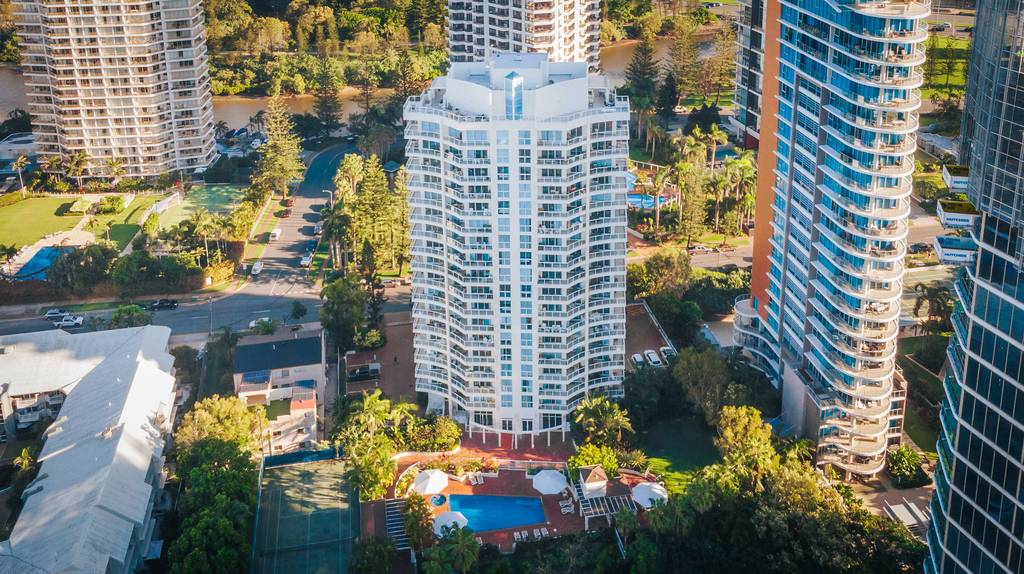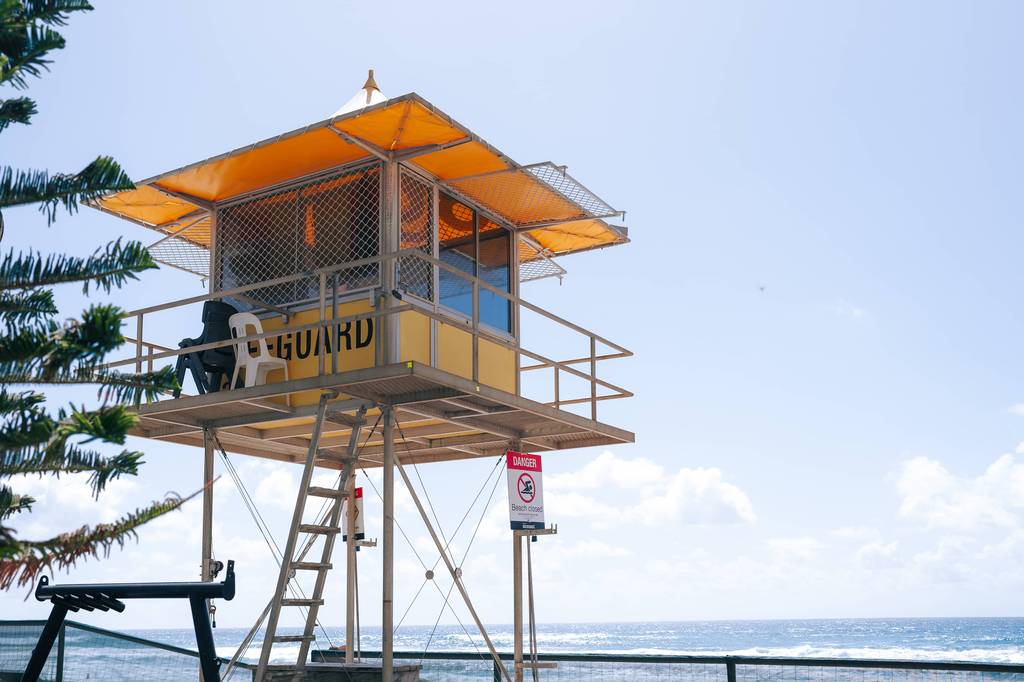
The Gold Coast is, in the end, one beach that happens to run for thirty-five unbroken kilometres. But anyone who spends more than a weekend here quickly learns the individual stretches are different animals: the same Pacific, yes, but a different swell, a different crowd, a different reason to be there. Main Beach is the quiet one at the top end. What follows is where to go when you’ve had your morning swim out front and the day’s still open.
The six beaches below are listed in order of distance from the door. The right one for a given day depends on who’s with you, what you feel like doing, and how much time you want to spend in the car. For most guests on most days, the answer ends up being number one.
1. Main Beach – the one out front
Two minutes from the door, on foot.
Before looking anywhere else, use this one properly. Main Beach is patrolled between the flags by the lifesaving club, wide enough that it rarely feels crowded, and sits far enough north of the Surfers high-rise shadow that you get the full run of morning sun without the wall of towers behind you. The surf is a consistent beach break with a sandy bottom; not Burleigh, but honest waves most days. An early swim or a later-afternoon one tends to be the calmest, since the sea breeze usually picks up around the middle of the day.
The foreshore parklands (grass, shade trees, picnic tables, a few benches with good ocean views) run the full length of the beach. Walk south along the sand and you’ll be in Surfers in about twenty minutes. Walk north and you’ll hit the Spit, which is the next entry.
2. The Spit – the wild one just north
Ten minutes north by car. Longer and better on foot.
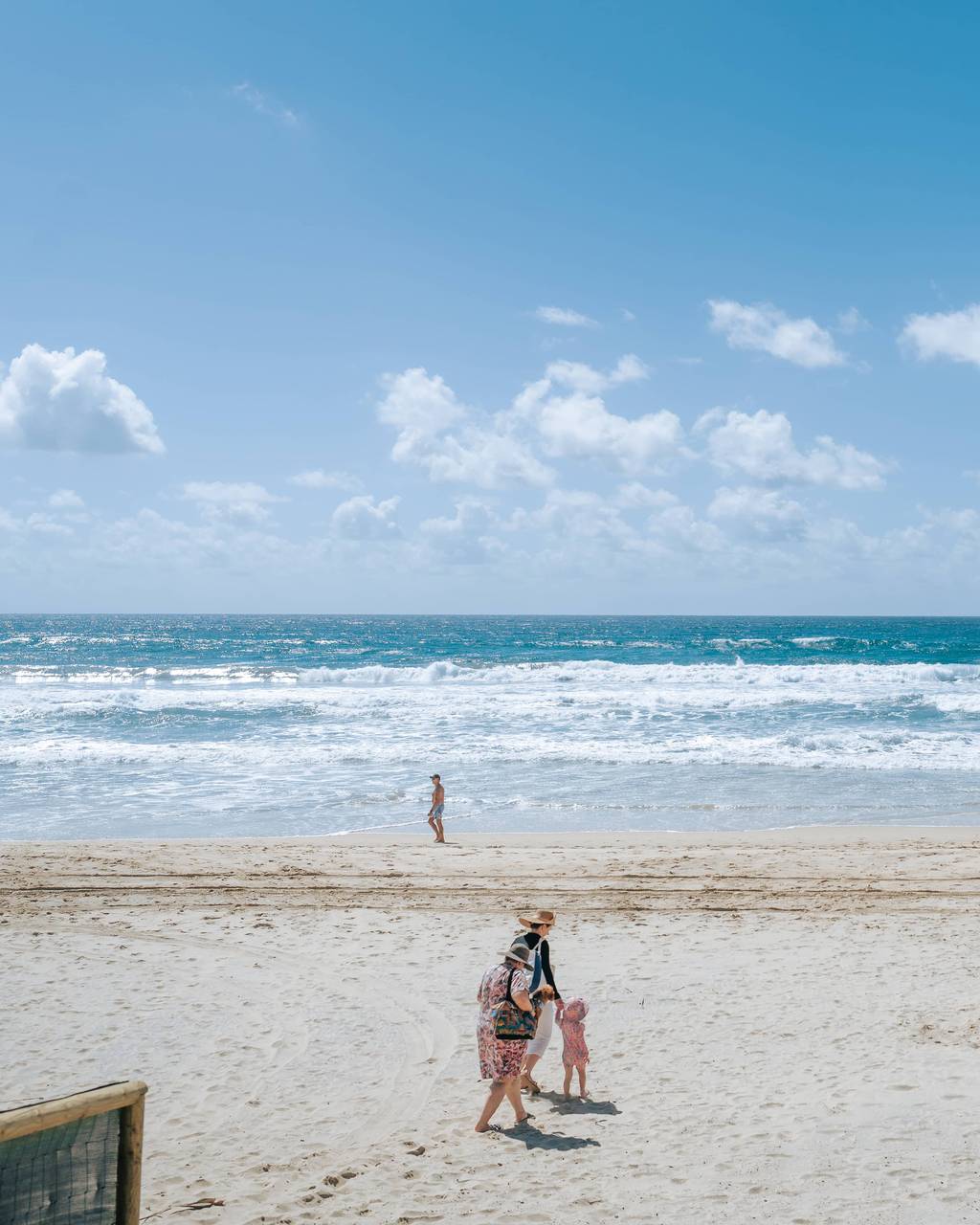
The Spit is the long finger of sand that separates the Broadwater from the Pacific, running from the end of the Main Beach precinct up to the Gold Coast Seaway. Most people drive along Seaworld Drive on their way somewhere else and never stop. That’s the gift of it: every beach access down the length is uncrowded, and the further north you go, the wilder it gets. By the time you reach Philip Park near the seaway, you’re on a low-dune coastline that looks essentially the way it did a century ago.
Bring shoes. It’s pandanus and dune grass, not a groomed esplanade. There’s a surf break on the ocean side that works best on a northerly swell, a patrolled off-leash dog beach near the seaway, and on winter and spring mornings the seaway itself is one of the best free whale-watching spots on the coast, with pods breaching within easy binocular range from the rock wall. Doug Jennings Park on the Broadwater side is a good flat-water swim for kids if the surf’s up on the ocean side.
If you’ve got a morning and don’t want to leave the postcode, this is the walk.
3. Burleigh Heads – the classic
Twenty-five minutes south by car.
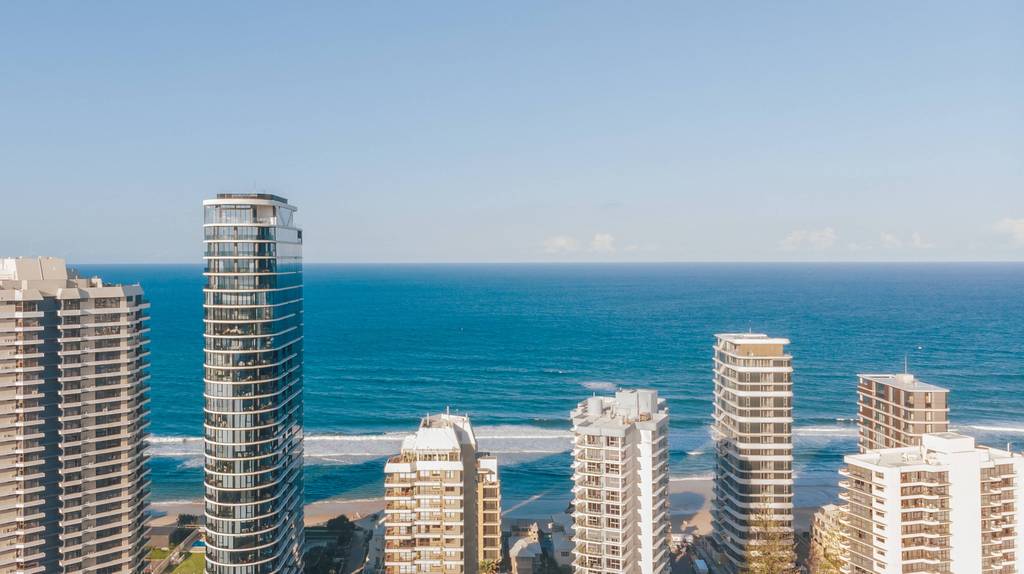
If Main Beach is the home game, Burleigh is the day out. It’s the beach most Australians picture when they picture the Gold Coast: a broad, north-facing crescent with one of the most celebrated point breaks in the country wrapping around the headland at its southern end. The right-hand point is for experienced surfers; the beach itself is for everyone else, and the rest is very, very good.
Make a morning of it. Walk the Oceanview Track through Burleigh Head National Park: 1.2 kilometres, about thirty minutes one-way, mostly flat, hugging the rocks just above sea level. The path threads past hexagonal basalt columns, occasional bush turkeys, and a final viewpoint back north to the Surfers skyline. It emerges at Tallebudgera Creek on the south side (the next entry on this list, two beaches for one drive). Come back on the inland rainforest loop via Tumgun Lookout if you’ve got the legs.
Afterwards, the strip behind the beach has a well-regarded cluster of cafés and restaurants if you want to make a meal of it; the James Street laneway and Goodwin Terrace (along the beachfront) are the two addresses to look at.
4. Tallebudgera Creek – the one for kids
Thirty minutes south. The pick if anyone in the group is under six.
Tallebudgera Creek mouth is a genuine anomaly on this coast: a wide, shallow, glass-flat estuary with a sandy bottom, lifeguards on the south side, and a gentle enough current that toddlers can paddle in it without a second thought. The water is cleaner than almost anywhere else on the Gold Coast; on a still morning it runs close to turquoise.
The south bank has grass, shade trees, picnic tables, the Tallebudgera Creek Caravan Park, and usable toilets. The north bank connects directly to Burleigh Head National Park. Arrive via the Oceanview walk and you come out at Echo Beach, a small sheltered sand crescent that is usually half-empty on a weekday morning and is worth knowing about in its own right. Pack lunch. Bring a second towel. Plan to stay longer than you think. This is the day most families end up remembering.
5. Currumbin Alley – the surf-and-rockpools one
Thirty-five minutes south.
Currumbin has the best combination of features on the coast: a long patrolled swimming beach, a sheltered tidal pool at the northern end called the Alley, and a reliable point break along the rocks. The water inside the Alley stays calm even when the open beach is working, which makes it the obvious next step for kids who’ve graduated from Tallebudgera but aren’t yet ready for proper open surf. Small fish in the rocks. Snorkels are worth bringing.
At the southern end, Elephant Rock is a short walk up a low headland with a wide view back up the coast; worth it at dawn or in the hour before sunset. The Currumbin Wildlife Sanctuary is a few minutes down the road if you need a plan B.
6. Snapper Rocks and Rainbow Bay – the world-class one
Forty-five minutes south, right at the NSW border.
This is the stretch that put the Gold Coast on the global surfing map. The Superbank, a two-kilometre sandbar running from Snapper Rocks through Rainbow Bay and Greenmount and into Coolangatta, produces one of the longest, hollowest right-handers anywhere on Earth. On a good swell there are five hundred surfers in the line-up and a professional contest underway. On an ordinary day it’s still worth twenty minutes on the headland before deciding whether to paddle.
For everyone else, Rainbow Bay itself is a sheltered, north-facing cove with easy swimming, a surf lifesaving club with a decent bistro, and one of the best sunset views on the coast looking back up towards the Surfers skyline. The Snapper Rocks sea pools, chiselled out of the headland by locals in 1956, are a quiet tidal soak at the point itself. Bring the kids for the pools; stay for the sunset with a cold beer at the club.
Getting there without a car
For Main Beach and the southern end of the Spit, you don’t need wheels. For Burleigh, Tallebudgera, Currumbin and Coolangatta, the car is usually easiest; the Gold Coast Highway runs roughly parallel to the coast and parking is manageable if you arrive before nine. That said, each of these beaches is reachable by Translink bus connecting from a G:link light rail interchange; Burleigh in particular is a clean tram-then-bus connection from the Broadbeach South terminus. Plan the return trip via the Translink journey planner before you set off.
Pack a towel. Leave early. The water is always there when you get back, and the outdoor pool at the building is heated to 28°C year-round if the ocean’s turned cool.